
Which power figure belongs to an industrial motor’s starting event? Equipment specifications can list continuous output, maximum AC power and a temporary overload value beside the same model. Reading those figures for all-in-one hybrid energy storage systems requires more than taking the largest number. Before the motor is matched to a source, each figure needs its rating category, duration and operating conditions attached.
Reading the Label Beside the Power Figure
Continuous output describes duty that equipment can sustain under its specified operating conditions. A maximum AC figure identifies another stated limit, while an overload allowance concerns operation beyond the normal rating for a restricted event. The labels distinguish different claims about the equipment, even when every value is expressed in kilowatts.
The word maximum does not supply a missing time condition. Its meaning depends on the accompanying specification, including the circumstances in which that value applies. A comparison that removes the label can turn a conditional limit into an assumed operating point without any supporting evidence.
Several figures beside one output are not separate sources that can be added together. They describe capabilities of the same equipment under different conditions. Adding a continuous value to an overload value would therefore create a power claim that the specification never made.
Equipment identity belongs beside the label as well. A transient figure for one converter or cabinet cannot automatically be assigned to another configuration in the same product range. Model, rating category and conditions form a single reference that must remain intact throughout the comparison.
Giving the Starting Event a Time Boundary
Temporary support addresses an excursion with a beginning and an end. Once a motor reaches its operating state, the remaining load returns to the applicable sustained-duty assessment. A larger temporary figure cannot carry an indefinitely elevated running load simply because that load originated during acceleration.
The starting requirement places a timed demand on all-in-one hybrid energy storage systems. Matching it involves the requested magnitude and duration against the permitted magnitude and duration. A high numerical allowance with no applicable time window leaves part of that match unresolved.
Repeated starts introduce another condition. Equipment starting once after a long idle period presents a different duty from repeated acceleration with little recovery between events. An allowance for one event does not establish an unlimited repetition rate, so the documented operating envelope needs to cover the intended sequence.
An operating envelope can include battery state and temperature as well as time. A claim documented under particular conditions cannot be assumed valid at every charge level or ambient temperature. Those conditions belong to the rating evidence used for the match.
The surrounding load also remains connected while the motor starts, unless the operating plan states otherwise. Available transient support has to accommodate the combined duty presented at the output. An isolated motor figure can therefore understate the demand imposed during an actual production restart.
Applying the Categories to a Motor-Starting Configuration
Separating starts reduces the overlap between temporary demands from different machines. A suitable soft starter can also change the demand presented during acceleration. Both measures act on the event being matched to the supply, without changing the meaning of the equipment’s continuous rating.
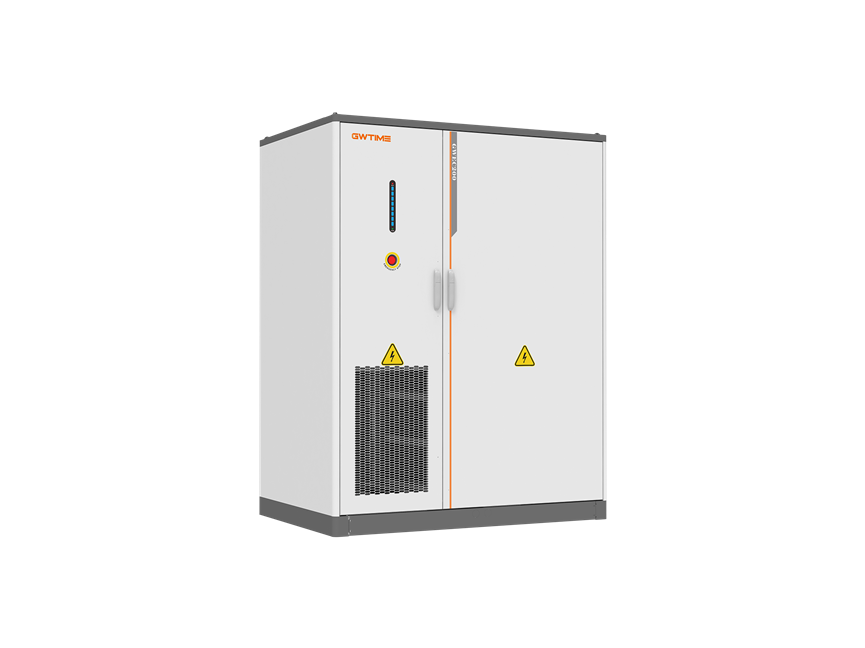
Three labels coexist in the GWTime 125 kW family: 125 kW continuous AC output, 137.5 kW maximum AC power and short-term overload reaching 200 kW for motor starting. The last figure corresponds to the stated 1.6-times PCS redundancy. It does not redesignate the cabinet as a 200 kW continuous source.
The short-term description retains a duration question for the specific motor event. A numerical overload duration cannot be invented from the 200 kW figure alone. Confirmation concerns the event’s applicable conditions, including the running load already present, rather than treating a peak value as a complete acceptance test.
Following the Rating Through the Complete Installation
Battery condition, conversion equipment and the connected load jointly determine the operating case for all-in-one hybrid energy storage systems. A converter’s documented allowance belongs within that complete path. It cannot establish the capability of an unidentified battery arrangement or an electrical connection with different operating limits.
Model-specific assessment remains necessary at a larger scale. The GWTime 335 kW/1028 kWh container includes a 335 kW PCS and an isolation transformer within the integrated assembly. That configuration has its own equipment identity; the smaller cabinet’s overload statement cannot be transferred to it as a general family characteristic.
The container specification separately gives a maximum apparent output of 368 kVA and maximum output current of 531 A. Apparent power and current add electrical constraints to the motor assessment; neither is another kilowatt rating. Their labels prevent unlike quantities from being compared as if they described the same limit.
Configuration inputs for the GWTime 125 kW system include motor details, critical loads, the single-line diagram, transformer and switchgear ratings. These connect the proposed start to the installation supplying it. A revised starter or restart order changes the event description and therefore belongs in the configuration record.
Every power value used in the decision should still carry the label under which it was specified. Continuous duty and the timed starting event then remain independently assessable. An overload number becomes useful engineering evidence only while its operating and duration conditions travel with it.
 admin002